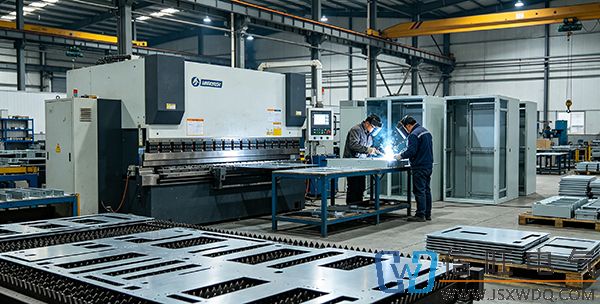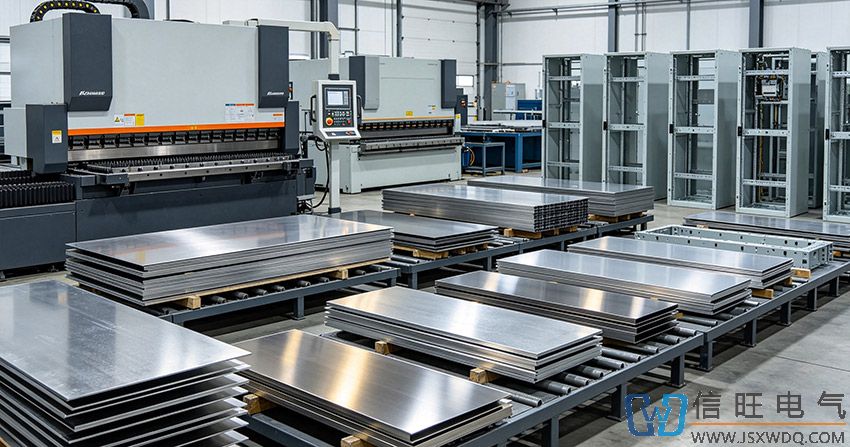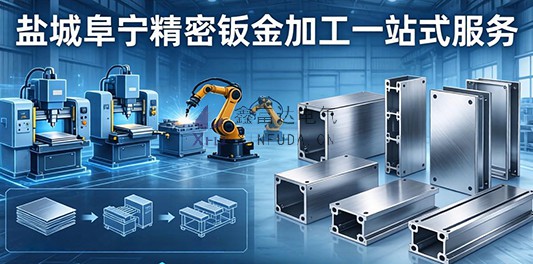

As a centralized area for electrical, energy storage, and automation components, there are numerous sheet metal processing companies. Many purchasing and assembly enterprises are easily impressed by the exquisite samples, complete equipment photos, and enthusiastic verbal commitments during the initial connection process. However, when it comes to large-scale production, they gradually encounter problems such as size drift, spray coating color differences, non-compliance with IP protection standards, delayed delivery, and mutual shirking when issues arise.
Many manufacturers "seem reliable", but they are merely good at presenting. The real challenge of delivering non-standard sheet metal components such as control cabinets, energy storage battery boxes, charging station shells, and stainless steel boxes lies in the ability to deepen the drawings, self-control throughout the process, standardized quality inspection, and problem closure. This article, based on the current situation of the local sheet metal industry, dissects the common deceptive tactics seen in the market, and provides a set of practical assessment methods for inspection, screening, trial order, and contract signing, helping you avoid low-price traps and select long-term suppliers that meet the project requirements.
1. These "seemingly stable" signals can easily deceive people
During the initial WeChat communication and online data review stages, many purchasers are easily misled by the following superficial manifestations. First, clearly distinguish which are superficial efforts:
Having a laser machine ≠ full-process self-production. Many merchants only have one laser cutting machine, and bending, welding, and spray painting are all outsourced to subcontractors. After receiving the order, it is passed on layer by layer, and each process is subcontracted to a different factory. The transmission of drawing information is prone to distortion, and the size tolerance, spray coating color, and sealing process standards cannot be unified. Especially for waterproof boxes with IP54 or IP65 standards, any one of the welding, sanding, shielding, or spray painting stages being out of control will lead to direct leakage when tested.
Samples made beautifully, but the batch production is unstable. Carefully polishing just a few samples is a common operation for many sheet metal factories: dedicated processing, repeated polishing, and separate spraying. Once entering mass production, changing operators, changing powder batches, simplifying inspection processes, and bending rebound, weld defects, spray flow marks, and scratches will all concentrate. Samples can only serve as a basic reference; being qualified in samples does not mean batch control is possible.
Low quotations, but vague item pricing. The most common marketing tactic is to use low prices. Some quotation sheets only list the processing cost of the sheet material, negative thickness differences, material downgrade, tax points, freight, packaging, silk-screening, accessories, and rework costs are added separately; even secretly changing 304 to 201, or changing 1.5mm plates to 1.2mm plates with negative thickness differences, it is difficult for the naked eye to quickly distinguish. Once put into on-site assembly, it is discovered that the strength is insufficient and the corrosion speed is fast.
Promising to do everything, accepting any drawing. Some business personnel, regardless of complex energy storage boxes, high-voltage cabinet frames, or fully welded stainless steel water tanks, all promise "no problem" without conducting DFM review, without mentioning bending risks, without reminding about R corners, rebound, or sealing structure defects. Factually, factories with technical strength will actively point out structural hazards and give optimization plans; saying everything is fine often means lacking a process engineer.
Pronouncing delivery dates and quality guarantees verbally, without written constraints. "One week delivery", "three-year warranty", "defects replaced" are casually stated, but the contract does not include extension compensation, defect handling procedures, acceptance standards, and material warranty requirements. Once there is a delay or quality issues, it is used as an excuse to shift responsibility due to the large number of orders, raw material price increases, or changes in customer drawings.
2. Identify the true source of the factory: Focus on whether the core processes are self-controlled
To determine whether a sheet metal manufacturer has the ability to provide stable support, the core is not about the size of the factory building, but whether the core processes are autonomously controllable. This is also the most crucial part of the control cabinet, energy storage, and sheet metal components for automation projects.
✅ The first step: Reliable drawing deepening and expansion capabilities. Professional sheet metal process engineers are equipped in the factory. After receiving the three-dimensional drawings, they will conduct DFM review: verifying the deduction of bending, rebound compensation, safety distance between hole positions and bending lines, sealing slots structure, drainage holes, grounding positions; Distinguish the different bending risks of stainless steel, aluminum plates, and galvanized plates, and provide modification suggestions in advance. Manufacturers that only directly import the model for cutting without conducting process reviews have a high rework rate.
✅ The second checkpoint: Bending and welding are the core of sheet metal precision. For stainless steel and aluminum plates, the issues of springback and cracking depend on the long-term accumulated parameter libraries and mold reserves. In terms of welding, for storage boxes and outdoor waterproof cabinet bodies, continuous full welding and polishing and shaping of the weld seams are required; if all welding is outsourced, the weld seam deformation, incomplete welding, and missed welding are almost impossible to control. You can inspect the bending mold library, welding stations, and tooling fixtures on-site.
✅ The third checkpoint: Surface treatment is the area with high incidences of color differences, poor adhesion, missed spraying, and masking failure. Only with a self-owned electrostatic spray painting line can the pre-treatment (oil removal, phosphating, and passivation), powder batch, baking temperature, and film thickness be stably controlled; you can stabilize the color matching according to the specified Pantone color number, and standardly mask the threaded holes, grounding contact surfaces, and sealing surfaces to ensure the salt spray performance of outdoor components.
✅ The fourth checkpoint: Inspection process. There should be a first-piece inspection, patrol inspection, and final inspection process, equipped with calipers, angle rulers, and paint film thickness meters; waterproof box bodies should have water testing and air tightness testing conditions; raw materials should be retained with material quality certificates. Factories that only rely on operators' naked eyes to check and do not have an independent quality inspection position will have their quality entirely dependent on the workers' state, and batch consistency cannot be guaranteed.
In a nutshell: For the four core processes of laser, bending, welding, and spraying, if two or more are outsourced, it is only suitable for simple brackets and ordinary thin sheet components. It is not recommended to entrust it with storage, outdoor protection, and other high-standard cabinet bodies.
III. On-site factory inspection, focus on observing which details?
No matter how smooth the online communication is, for important orders, it is necessary to arrange an on-site factory visit. Local factories are closer, and the inspection cost is lower. A few details can reveal the management level:
Workshop material zoning: Plates, semi-finished products, inspected items, qualified items, and defective items are placed separately, with clear markings, in accordance with 6S standards. Factories where semi-finished products are randomly piled up and the plate surfaces are scratched everywhere, the protection of finished products is likely to be perfunctory;
Tool management: Are calipers and angle rulers regularly calibrated and do they have calibration labels;
Waste handling: Is the defective items directly piled up for rework or are they casually discarded and mixed with qualified items;
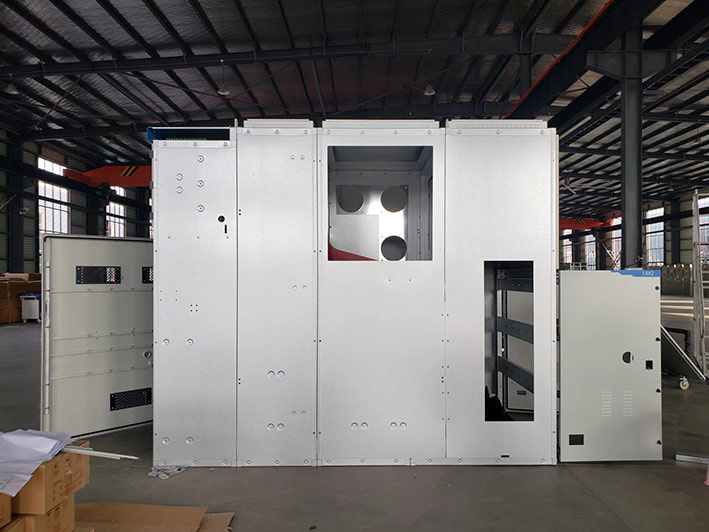
Similar case physical objects: Directly observe the finished products of the same type of cabinets, battery boxes, and stainless steel boxes, and focus on observing the flatness of the weld seam grinding, the uniformity of the door plate gap, the spray plastic edges and corners, and the bending angle position;
Ask about production scheduling: Is the order scheduling random after backlog, can urgent orders provide a clear production schedule, or is it just casually promised with a delivery date?
At the same time, you can have a brief communication with the process engineer: How to compensate for the springback of 304 stainless steel bending, what is the minimum bending R angle for 5052 aluminum plates, and what structural aspects should be noted for IP54 cabinet bodies? Professional manufacturers can provide clear process logic; if the salesperson answers technical questions, they are vague, which is of higher risk.
IV. Quotation and Contract Signing: Put all vague verbal agreements on paper
Many disputes originate from not clearly defining the boundaries during the quotation and contract stage. For non-standard sheet metal orders, it is recommended to clearly write the following contents in the quotation and contract:
Plate material, grade, and thickness tolerance requirements: SPCC, SGCC, 304-2B, 5052-O, clearly indicate whether it is sufficient in thickness, and require the accompanying material certificate;
Process scope: Whether it includes laser cutting, bending, welding, polishing, pre-treatment, spray painting, silk-screen printing, assembly, sealing strips, door lock hinges; powder color number, film thickness, salt spray requirements;
Acceptance standards: Dimension tolerance, appearance standards, IP testing requirements, first-piece confirmation process; Agreement: First-piece signature sealing, batch acceptance based on the first-piece as the benchmark;
Price composition: VAT rate, whether including freight, packaging method; Distinguish the charging rules for proofing fees, production unit prices, and changes in drawings;
Delivery terms and exceptional clauses: communication mechanism for delayed delivery, rework / return and exchange cycle for defective products, freight for rework, and liability for losses.
V. Safe Cooperation Process: Do not place large orders directly
Provide a safe cooperation path suitable for sheet metal procurement, avoiding falling into a major mistake all at once: Step 1: Send the drawings, ask the other party to provide process review opinions and formal itemized quotations, to assess the technical response capability; Step 2: Conduct proofing first, after obtaining the samples, conduct size re-measurement, assembly trial assembly, water resistance parts conduct water test verification, simultaneously check the appearance, spraying, and sealing effects; Step 3: Small batch trial production (within 50 units or less), continuously track 2-3 batches, observe batch consistency, delivery on-time rate, and problem response speed; Step 4: After the trial production is stable, sign a long-term framework order, lock the material, powder, and process standards, ensure long-term supply of colors and sizes are unified.
Many customers are eager to start production and skip proofing, small batch trial production, and directly place large orders. Once the process plan does not match, the entire batch is scrapped, and the loss is much higher than the slight processing difference saved.
Conclusion
For sheet metal procurement, low price is not the core competitiveness. What matters is stability, controllability, and the ability to promptly close any issues. Rich and diverse sheet metal supporting resources are available, providing a wide range of choices. However, they are also mixed. Those manufacturers that merely rely on attractive samples, attract customers with low prices, and make empty promises often expose their shortcomings during the batch production stage.
Contact
Be the first to know about our new product launches, latest blog posts and more. Jiangsu Xinwang Electric Co., Ltd. was founded in March 2013 with a registered capital of 10 million yuan. Its registered address is No. 3, Chuanyang Road, Development Zone, Funing County, J... Any question or request?
Click below, we’ll be happy to assist. Contact
扫码咨询
友情链接:PDS863液位变送器 食品废水气浮机 ABB继电器 高效液相色谱 可视化大屏
声明:本站部分内容图片来源于互联网,如有侵权尽早时间联系管理员删除! Email:www@jsxwdq.com
Copyright © 2025-2026 Jiangsu Xinwang Electric Co., Ltd. All Rights Reserved. 苏ICP备2026037747号-1