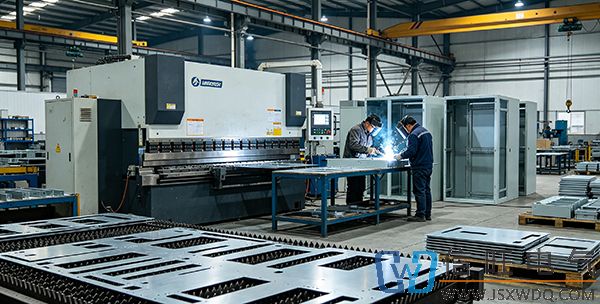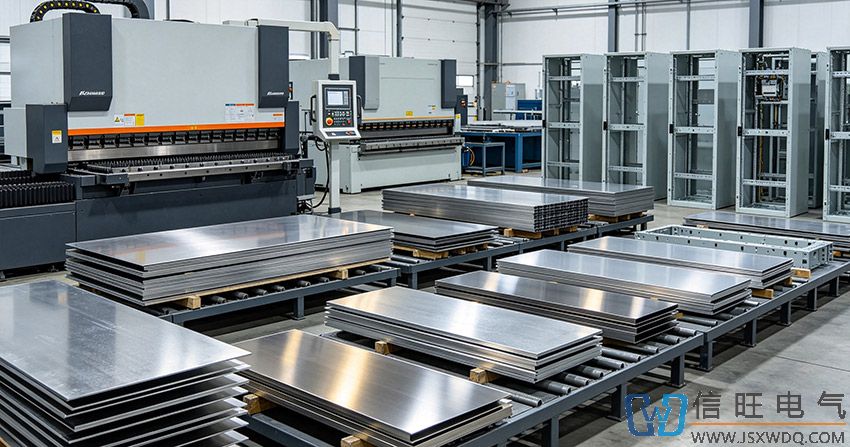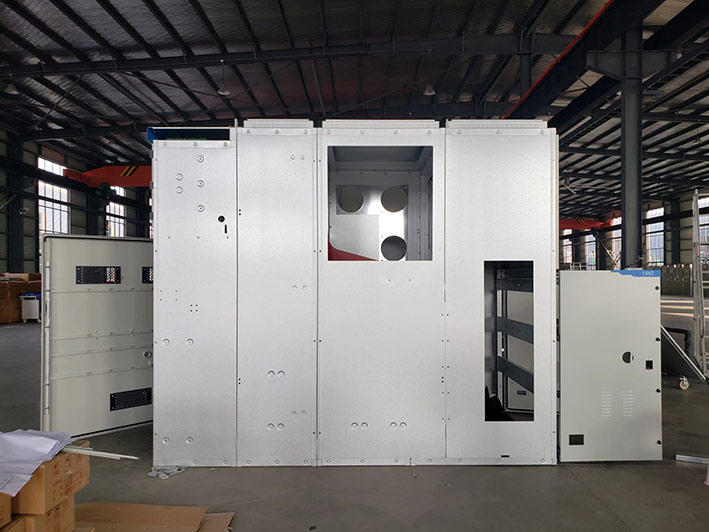

On the surface, the delivery of standard structural components in chassis and cabinet sheet metal processing may seem like a simple process of specification matching and bulk supply. However, in actual implementation, it requires coordinated consideration of multiple dimensions: load-bearing stability, heat dissipation efficiency, internal wiring rationality, maintenance convenience for vulnerable parts such as door locks, spray coating appearance consistency, and the production rhythm of mass assembly. If the project only focuses on single cost indicators like sheet metal thickness and unit price in the early stage, a series of hidden problems will easily emerge intensively in subsequent stages including prototype verification, trial assembly debugging or small-batch trial production. These issues, such as component interference caused by hole position deviation, heat dissipation bottlenecks triggered by air duct design conflicts, and transportation losses due to insufficient packaging protection, will not only increase rework costs but also possibly delay the overall project schedule.
For procurement teams that are currently evaluating customized cabinet enclosures in Yancheng or looking for customized server cabinet manufacturers in Yancheng, it is recommended to advance supplier assessment to the structural review stage. Xinfuda Electrical will first confirm the drawing inputs, functional boundaries and delivery rhythm, and then determine whether the project is closer to ordinary chassis, communication cabinet sheet metal processing, or the introduction of complete machine enclosures with assembly constraints.
If the project already has a prototype or an old version, it is recommended to provide assembly photos, rework records and on-site maintenance feedback at the same time. Many problems do not lie in a single part, but in the opening and closing of door panels, sliding rails, PDU installation, wiring margin, and re-inspection after packaging drop tests. Incorporating this information into the first round of review can reduce subsequent situations where reaming, gaskets and temporary reinforcements are used to rush the delivery schedule.
In practice, it is recommended to split the drawings into four layers: "load-bearing parts, opening parts, maintenance parts and appearance parts". For load-bearing parts, check the folded edges, reinforcing ribs and welding deformation; for opening parts, check the ventilation area, shielding continuity and edge treatment; for maintenance parts, check the door locks, hinges, sliding mechanisms, grounding points and filters; for appearance parts, check the spray coating, silk-screen printing, packaging and re-inspection after transportation. After splitting into four layers, the project team can more easily determine which structures must be conservative and which areas can be optimized for cost reduction.
If the project needs to transition from the prototype to small-batch trial production, it can be used in conjunction with the "sheet metal prototype to mass production process checklist", and the first article inspection, process parameters, trial assembly photos and anomaly resolution duration should be recorded in the same form. In this way, procurement, engineering, quality and production teams can share a unified judgment standard, reducing the risk of "prototype passed but small-batch production out of control".
If the supplier can only verbally promise "it can be done" but cannot provide record templates and project nodes, subsequent delivery will easily rely on on-site rework to maintain operations.
If two of the three sets of signals deviate from the target consecutively, do not directly expand the production scheduling. Instead, return to review the drawings, tooling or outsourcing nodes first. For cabinet projects involving spray coating, silk-screen printing, packaging and multi-version switching, assign responsible persons and deadlines to project milestones to avoid relying on temporary rush orders to solve systematic problems.
The current recommended action for chassis and cabinet projects from Xinwang Electrical is: first submit drawings to obtain structure and assembly assessment, then determine whether to proceed with a single prototype verification, or arrange "small-batch trial production + mass production ramp-up". If the project also involves communication cabinet sheet metal processing, server cabinets or customized cabinet enclosure services in Yancheng, please also specify the heat dissipation, wiring and maintenance operations to facilitate a complete one-time assessment.
Contact
Be the first to know about our new product launches, latest blog posts and more. Jiangsu Xinwang Electric Co., Ltd. was founded in March 2013 with a registered capital of 10 million yuan. Its registered address is No. 3, Chuanyang Road, Development Zone, Funing County, J... Any question or request?
Click below, we’ll be happy to assist. Contact
扫码咨询
友情链接:盐城钣金加工 钣金加工厂家 高低压开关柜 配电箱配电柜厂家 新能源柜体 PDS863液位变送器 食品废水气浮机 ABB继电器 高效液相色谱
声明:本站部分内容图片来源于互联网,如有侵权尽早时间联系管理员删除! Email:www@jsxwdq.com
主营城市 : 上海 江苏 盐城 南京 苏州 常州 无锡 南通 泰州 淮安 镇江 徐州 连云港 宿迁 扬州 安徽 合肥 浙江 杭州 宁波 温州 山东 济南 青岛 烟台 昆山 江阴 常熟 张家港 太仓
江苏信旺电气有限公司 | 全国34省333地级行政区供货 | 全球50多国出口 | 高新技术企业 | 专精特新企业 | 官网:http://www.jsxwdq.com | Copyright © 2025-2026 Jiangsu Xinwang Electric Co., Ltd. All Rights Reserved. 苏ICP备2026037747号-1